What you see
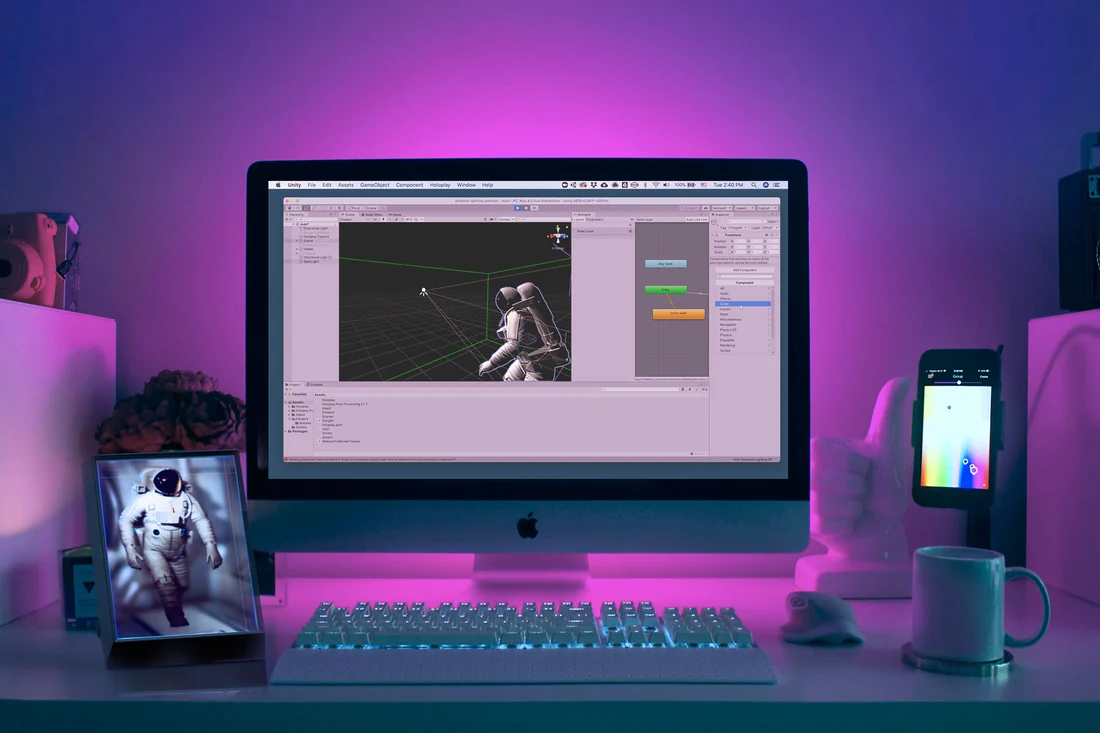
A Looking Glass Portrait sits on a desk like a small picture frame and shows a subject that appears to sit behind the glass with real depth, without glasses or a headset. Move your head and the image reveals new sides of the object, the way it would look through a window at something three-dimensional. Several people can stand around it at once and each sees a correct-looking angle at the same time. The company's own archived product page calls this a shared, group-viewable experience precisely because no viewer needs a tracked headset.
How it works
Looking Glass Factory calls the Portrait a light-field display, and its specification sheet, preserved in a 2021 snapshot of the product page, lists a 58-degree viewing cone and 45 to 100 simultaneous views from a single panel. Rather than tracking one viewer's eyes, the display renders many pre-computed perspectives at once and directs each toward a narrow band of space, so a viewer's eyes intercept a consistent pair of views wherever they stand inside the cone. Source content comes from the company's HoloPlay Studio software, which converts an ordinary phone photo shot in Portrait Mode into multi-view content, since those photos already carry a depth map; 3D models built in Unity or Unreal export the same way. The unit can also run untethered from a built-in computer, looping stored content without a host machine.
Viewing conditions and limits
Both archived captures of the product page, from 2021 and 2022, agree: a 58-degree cone and up to 100 views from one panel, at an input resolution of 1536 by 2048 pixels. Outside that cone the image breaks down, so a Portrait is a tabletop object viewed from in front rather than a display projecting into open space. The 100-view figure is the company's own specification; the pages include no independent optical measurement of view count or crosstalk, so treat it as a design target, not a third-party test result.
What it is not
Looking Glass Factory's marketing calls the Portrait's output a hologram throughout the archived pages, and the copyright line on those pages dates to 2020, consistent with the product's original release that year. But the mechanism is a multi-view light-field panel, not an interference hologram: nothing records a wavefront with coherent laser light as a Denisyuk or transmission hologram does, and the image is generated from a stack of rendered or photographed views. It is closer in spirit to a fine lenticular print that emits many angles instead of two.
- Ask whether a quoted number of views was measured independently or is the vendor's own design specification.
- Ask what happens to image quality at the edges of the viewing cone rather than dead center.
- Ask whether the source content was authored as true multi-view data or a single 2D image with an estimated depth map.
The Portrait shows how industry language works against a careful reader: a company building a genuinely interesting light-field panel still reaches for the word hologram, even though its real achievement, a glasses-free, group-viewable cone of perspectives, is easier to evaluate once named correctly.
Sources & reading trail
Company's own description of the light-field mechanism, 58-degree viewing cone, 45-100 views, and HoloPlay Studio content authoring.
Source published: Not established · Retrieved: 16 September 2026
Confirms the same viewing-cone and view-count specifications a year later and describes the group-viewable, headset-free experience.
Source published: Not established · Retrieved: 16 September 2026
Papers, patents, vendor documentation and records establish the entry; the mechanism reading is Hologram Field Guide editorial analysis. This retrospective draft does not imply the site published on the event date.