What you see
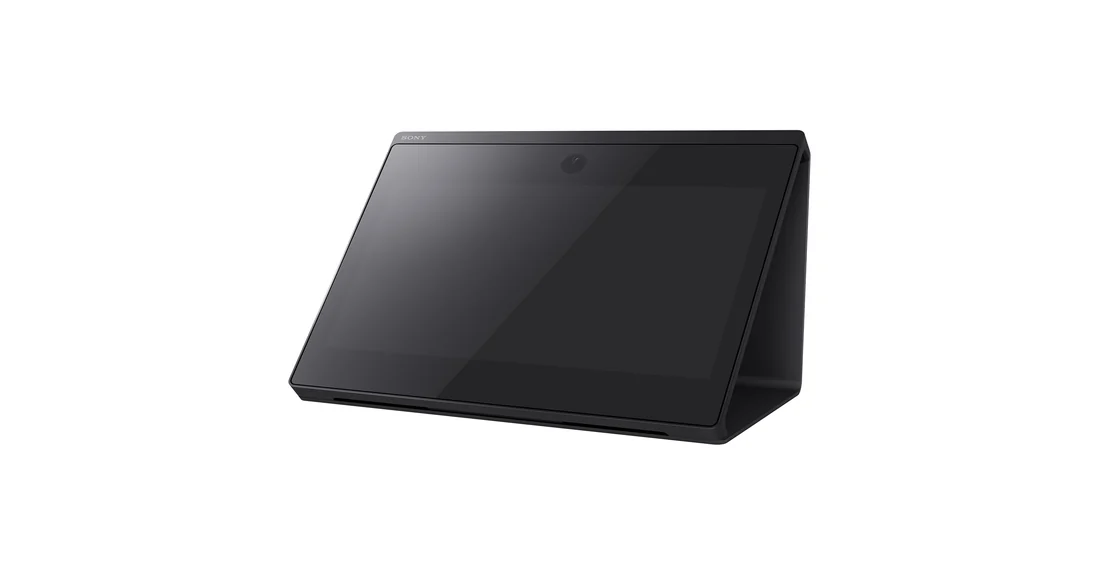
Sony's ELF-SR1 looks like a 15.6-inch monitor showing a 3D scene that appears to extend behind and in front of the glass, readable with the naked eye and no glasses. The company's own 2020 product page says content extends deep within the display from any viewing angle, and that simply moving side to side or up and down makes the scene feel interactive, as though the viewer is looking through a window at a physical object rather than at a flat screen.
How it works
Sony's page describes a micro optical lens positioned precisely over the LCD panel that divides the image into separate left- and right-eye views, producing stereoscopic 3D without glasses. A high-speed vision sensor tracks the position of the viewer's pupils on three axes, down to the millisecond, and a real-time rendering algorithm redraws each eye's image continuously to match head position, so the parallax updates as the viewer moves. Sony's own marketing language never uses the word hologram anywhere on this page; it consistently calls the device a spatial reality display, a 3D display, or a new medium, which is a meaningfully narrower claim than free-space holography.
Viewing conditions and limits
Because the mechanism depends on tracking one viewer's eyes and steering a left/right image pair specifically to that person, the device is built around a single tracked viewer rather than a crowd; Sony's own case-studies page, archived in 2022, describes professional users such as game studios and medical and dental teams evaluating models at a workstation, a single-user setting consistent with eye-tracked stereoscopy. Sony's page states the panel diagonal, 15.6 inches, and the original list price, $4,999.99, as its own figures; it gives no independently measured field of view or viewing-distance range.
What it is not
The ELF-SR1 is not a hologram in the interference sense and not a light-field display of the kind that emits many simultaneous views for many viewers, such as a Looking Glass panel; it is single-viewer autostereoscopic 3D built from lenticular optics plus eye tracking. It is also not glasses-based stereo 3D, since no eyewear is required, and it is not a volumetric display, since the image only reads correctly from the tracked viewer's position rather than from arbitrary points around the unit.
- Ask whether a demonstrated Spatial Reality Display was shown to one tracked viewer or to a crowd.
- Ask what happens to the 3D effect when a second person looks over the tracked viewer's shoulder.
- Ask whether the eye-tracking range and refresh figures come from Sony or an independent test.
Sony's own restraint in avoiding the word hologram is itself informative: the company that makes some of the most convincing glasses-free 3D on the market still describes it in narrower, more precise terms than several competitors selling less capable panels.
Sources & reading trail
Sony's own description of the micro optical lens, eye-sensing mechanism, real-time rendering, price, and panel size.
Source published: Not established · Retrieved: 16 September 2026
Documents single-workstation professional use cases in game development, medical, and dental fields.
Source published: Not established · Retrieved: 16 September 2026
Papers, patents, vendor documentation and records establish the entry; the mechanism reading is Hologram Field Guide editorial analysis. This retrospective draft does not imply the site published on the event date.